Introduction – Short & Exciting Safari
Experience Tanzania’s iconic wildlife and landscapes in just three days with expert-guided safaris through the Serengeti and Ngorongoro Crater.
Back 👉 Home
This compact safari offers unforgettable encounters with lions, elephants, zebras, and wildebeest across the Serengeti Plains and Ngorongoro Crater, perfect for short trips or layovers.
Time-Efficient: Perfect for travelers with limited time.
Wildlife Highlights: Lions, elephants, buffalo, and abundant plains game.
Scenic Landscapes: Vast savannahs, crater rims, and panoramic vistas.
Expert Guidance: Certified guides provide insights into wildlife and ecosystems.
Vibe: Endless plains teeming with wildlife.
Why Visit: Iconic predator-prey interactions and abundant game.
What You’ll See: Lions, cheetahs, wildebeest, zebras, and giraffes.
Best Time: June–October for dry season wildlife spotting.
Vibe: Unique volcanic crater ecosystem.
Why Visit: Dense wildlife population within a stunning crater landscape.
What You’ll See: Black rhinos, elephants, hippos, lions, and buffalo.
Best Time: Year-round, with excellent game viewing conditions.
Day 1 – Serengeti Game Drive
Morning: Transfer from Arusha or Kilimanjaro airport.
Afternoon: Game drive in central Serengeti, spot predators and plains game.
Evening: Dinner and overnight at Serengeti lodge or tented camp.
Day 2 – Full-Day Serengeti Safari
Morning: Early game drive to witness wildlife in action.
Midday: Picnic lunch on the plains.
Afternoon: Continue safari, capturing dramatic predator-prey moments.
Evening: Sunset photography, dinner, overnight at lodge/camp.
Day 3 – Ngorongoro Crater & Departure
Morning: Drive to Ngorongoro Crater, descend for a half-day game drive.
Midday: Lunch at crater rim lodge or picnic spot.
Afternoon: Return to Arusha or airport for onward travel.
| Lodge/Camp Name | Level | Features |
|---|---|---|
| Serengeti Serena Safari Lodge | Mid-Range | Central location, easy game drives access |
| Kubu Kubu Tented Camp | Luxury | Scenic river views, expert guides |
| Rhino Lodge (Ngorongoro) | Budget | Affordable, close to crater rim |
| Ngorongoro Serena Safari Lodge | Mid-Range | Crater views, comfortable accommodation |
Game Drives – Morning and afternoon drives to maximize wildlife encounters.
Wildlife Photography – Capture lions, elephants, zebras, and more.
Cultural Visits – Optional Maasai village experience near Ngorongoro.
Bird Watching – Spot raptors, flamingos (Ngorongoro), and other exotic species.
Scenic Viewing – Sunrise and sunset photography over savannahs and crater rims.
| Month | Weather | Notes |
|---|---|---|
| June–October | Dry season | Best for wildlife viewing, predators near water sources |
| November–December | Short rains | Lush scenery, fewer tourists, good for birdwatching |
| January–March | Warm & dry | Calving season in Ndutu area, baby animals visible |
| March–May | Long rains | Trails muddy, fewer tourists, wildlife dispersed |
Lightweight safari clothing (neutral colors)
Hat, sunglasses, and sunscreen
Binoculars and camera with zoom lens
Comfortable walking shoes
Light jacket for mornings/evenings
Refillable water bottle
Always stay in the vehicle during game drives unless instructed.
Follow guide instructions carefully.
Do not approach or feed wildlife.
Keep a safe distance from predators and elephants.
Carry basic first-aid and personal medications.
Time-Saving: Highlights key wildlife and landscapes quickly.
Wildlife Encounters: Dense populations of predators and plains game.
Professional Guidance: Expert insights into animals and ecosystems.
Photographic Opportunities: Dramatic lighting and diverse wildlife scenes.
Memorable Experience: Short, action-packed safari suitable for all travelers.
Q: Can I do this safari from Arusha or Kilimanjaro airport?
A: Yes, transfers can be arranged; ideal for short trips or layovers.
Q: Is 3 days enough to see wildlife?
A: While compact, it covers Serengeti and Ngorongoro highlights effectively.
Q: Are lodges included?
A: Options vary; mid-range, luxury, and budget lodges/camps available.
Q: Can children join?
A: Yes, suitable for families; confirm age restrictions with operators.
Q: When is the best time to go?
A: June–October dry season offers optimal wildlife viewing.
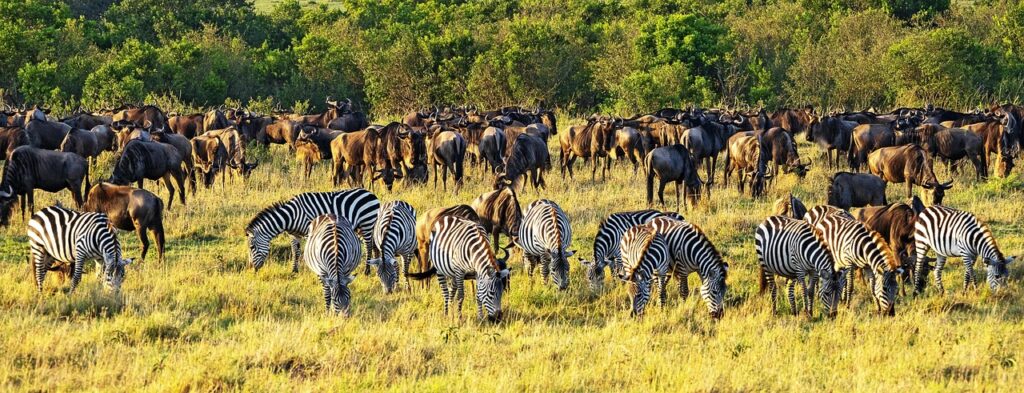
Massive Herds: Witness large zebra herds moving across plains with wildebeest.
Predator-Prey Interactions: Lions, cheetahs, and hyenas exploit migrating herds.
Spectacular Photography: Capture dramatic landscapes filled with thousands of striped zebras.
Seasonal Insight: Learn about migration triggers, grazing patterns, and ecological balance.
Educational Experience: Understand the role of zebras in maintaining Serengeti’s ecosystem.
1. Ndutu Plains
Vibe: Open grasslands filled with migrating herds.
Why Visit: Peak time for calving zebras and predator activity.
What You’ll See: Young calves, adult zebras grazing, lions stalking herds.
Safari Tip: Early morning drives provide the best light and active wildlife.
2. Central Serengeti (Seronera Valley)
Vibe: Resident zebra herds with seasonal migration overlap.
Why Visit: Observe interaction between resident and migratory populations.
What You’ll See: Social behavior, grazing competition, and predator stalking.
3. Western Corridor (Grumeti River)
Vibe: Riverine environment with dramatic crossings.
Why Visit: Witness zebras crossing rivers with crocodile threats.
Highlight: Natural choke points create intense predator-prey moments.
4. Northern Serengeti (Mara River)
Vibe: Rugged terrain with large river crossings.
Why Visit: Dramatic wildlife photography opportunities during crossings.
What You’ll See: Zebras and wildebeest navigating crocodile-filled waters, lions waiting nearby.
| Lodge/Camp Name | Level | Features |
|---|---|---|
| Sayari Camp (Asilia) | Luxury | Located near Mara River crossings, ideal for zebra migration. |
| Serengeti Serena Safari Lodge | Mid-Range | Centrally located with access to resident and migrating herds. |
| Kati Kati Tented Camp | Mid-Range | Mobile camp following migration routes. |
| Nyikani Central Camp | Budget | Affordable option in central Serengeti near migration routes. |
Full-Day Game Drives – Track migrating herds and predator activity.
River Crossing Safaris – Observe dramatic zebra crossings with natural hazards.
Photography Safaris – Capture the movement and patterns of massive herds.
Birdwatching – Watch species that follow migrating herds for feeding opportunities.
Early Morning Drives – Witness active herd behavior in soft light.
Day 1 – Arrival & Afternoon Drive
Arrive at lodge and take first game drive tracking nearby zebra herds.
Day 2 – Full-Day Migration Safari
Morning: Follow migratory routes through Ndutu and central plains.
Afternoon: Observe predator-prey interactions, calf first steps, and herd dynamics.
Day 3 – River Crossings & Departure
Morning: Mara or Grumeti River crossings (seasonal).
Afternoon: Transfer for flight or road departure.
| Month | Weather | Notes |
|---|---|---|
| June–July | Dry season | Herds in central & western Serengeti; river crossings begin. |
| July–October | Dry season | Peak river crossings at Mara River; excellent predator sightings. |
| November–December | Short rains | Herds move south to Ndutu; calving season begins. |
| January–March | Wet season | Calving in Ndutu; lush grasslands attract predators. |
Binoculars and camera with zoom lens.
Neutral-colored clothing and wide-brim hat.
Sunscreen, insect repellent, and water bottle.
Sturdy shoes for game drives and short walks.
Field guide for zebra behavior and wildlife tracking.
Stay in vehicles unless guided.
Follow ranger instructions for safety.
Maintain a safe distance from predators and herds.
Avoid loud noises that may disturb wildlife.
Unique Wildlife Experience: Witness massive, coordinated herd movements.
Dramatic Photography Opportunities: Capture river crossings and predator-prey dynamics.
Educational Insights: Learn about migration patterns, ecosystem balance, and survival strategies.
Memorable Safari: A rare glimpse into one of nature’s most iconic spectacles.
Q: When is the best time to see the zebra migration?
A: June–October for river crossings and July–October for peak herd movement.
Q: Are river crossings safe to view?
A: Yes, from guided vehicles at safe distances.
Q: Can I photograph the migration?
A: Absolutely, guides help position you for the best photographic opportunities.
Q: Do zebras migrate with wildebeest?
A: Yes, zebras often travel with wildebeest herds for grazing and predator protection.
Q: Is a guided safari necessary?
A: Yes, guides ensure safety and maximize sightings during migration.
Fullmoon Safaris, your partner for individual or group organized trips and safaris in Tanzania.
Fullmoon Safaris, We accept all means of payments listed below:

copyright©Kilifullmoon Safaris